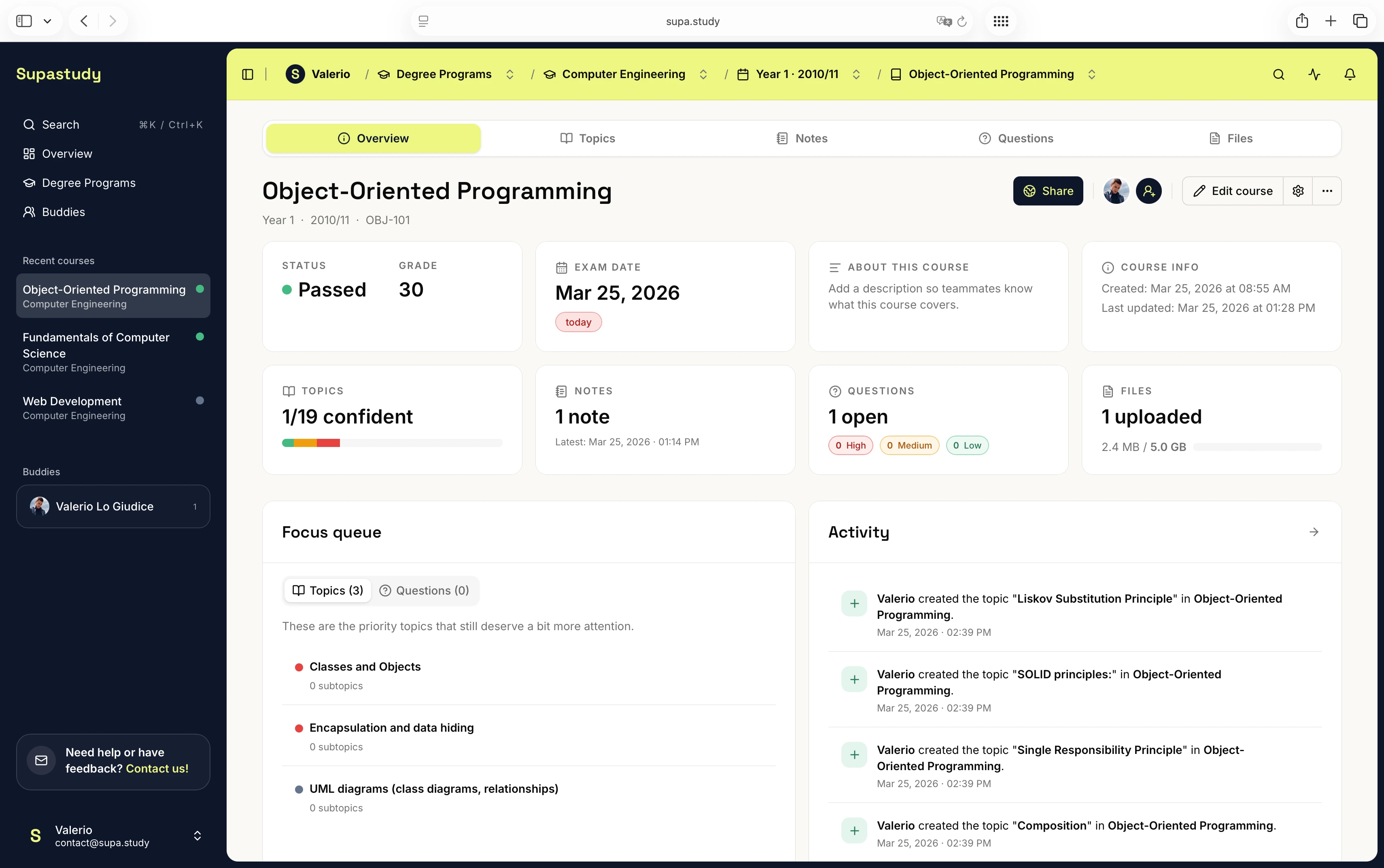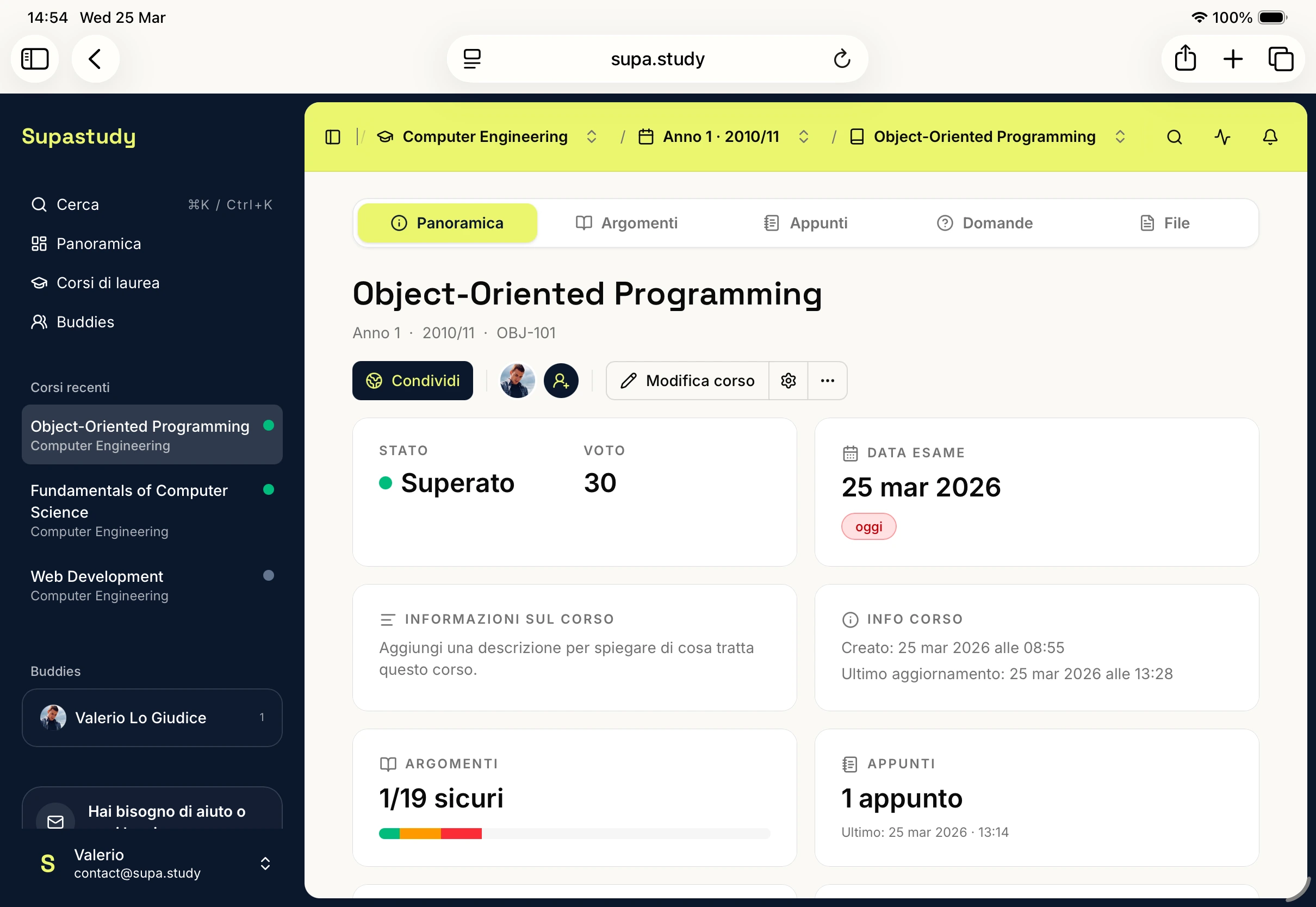
Not every course should be shared in the same way.
Sometimes a course needs to stay closed to a few classmates who are actively building it together. Other times, the course has become useful enough that broader discoverability makes sense, either because the structure is reusable or because the materials could help other students in the same degree path. Those are different goals, and they need different sharing models.
In Supastudy, that choice is the difference between a private course and a public course.
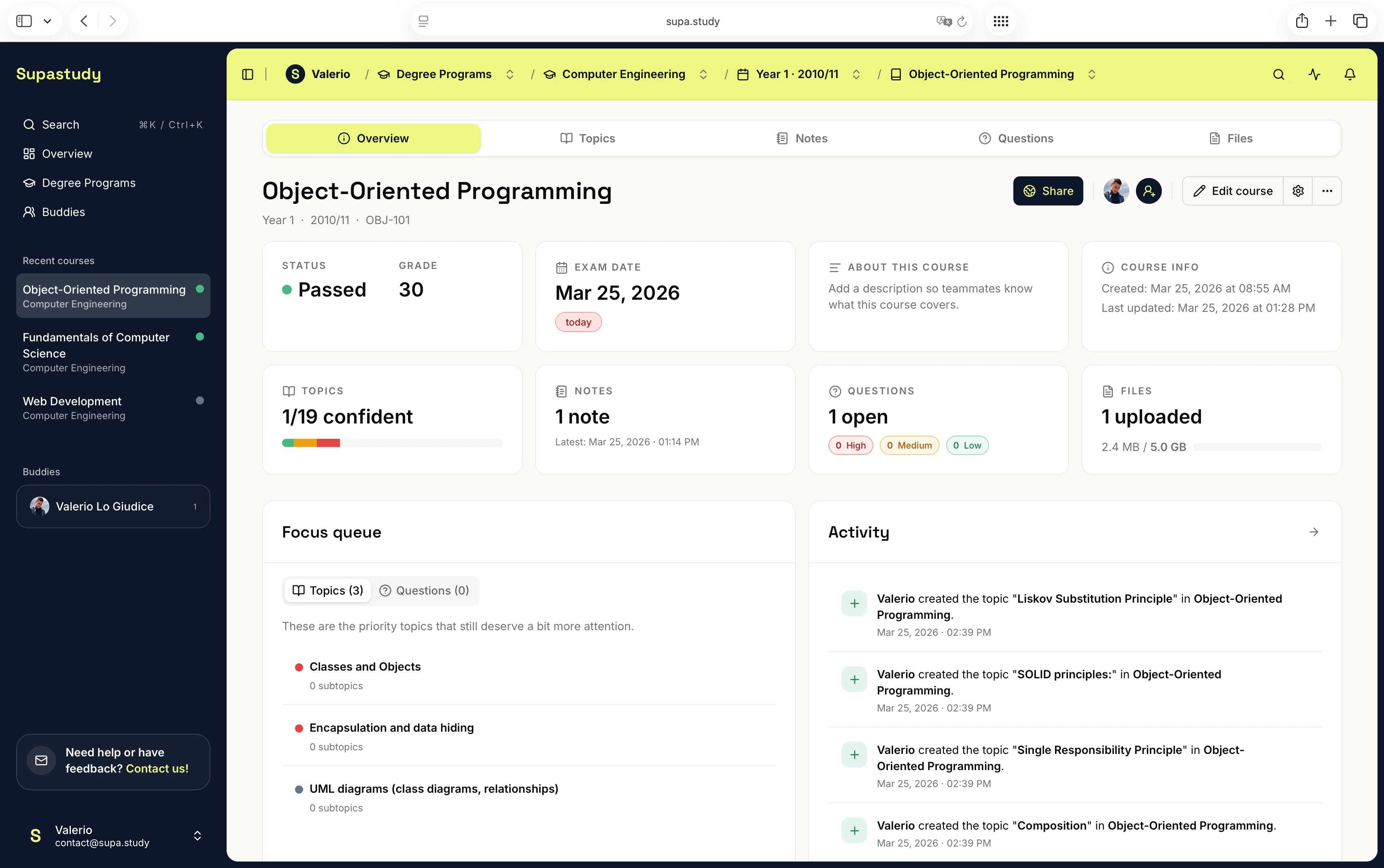
Private and public courses solve different moments in the life of a course
A useful way to think about the difference is this: a private course is for building, while a public course is for sharing and discovery. Both can contain the same kind of academic structure, but they serve different social purposes.
When a course is still being assembled, students usually need control more than reach. They are deciding how to structure the syllabus, cleaning up notes, uploading files that may still change, and working through unresolved questions. At that stage, collaboration benefits from a protected environment where the people involved know exactly who can edit, who can invite others, and who is simply there to read and download material.
When the course has matured, the priorities can shift. A well-structured course may become useful not only to the original group, but also to other students following the same degree path. At that point, discoverability and stable read-only access start to matter more than closed editing.
Choose a private course when the work is still active
A private course is invite-only. It is designed for collaboration where access is controlled by the people managing the course, which makes it the right default for most active study groups. Inside a private course, roles matter. Owners keep full control, moderators can help manage members and invite links, members can contribute content, and viewers can read and download materials without editing them.
That mix of structure and control is important because collaborative study works best when people know what kind of space they are inside. A group that is still actively writing notes, uploading files, and resolving questions usually needs a protected environment more than it needs wide visibility. It is easier to experiment with the topic tree, refine explanations, and decide what should stay in the course when the workspace is not also trying to serve a wider audience.
Private access is also a cleaner fit for classes where the study group has its own working habits and division of labor. One person may focus on notes, another on collecting files, another on resolving questions after office hours. That workflow is easier to manage when the course can evolve without the pressure of being immediately visible to everyone else.
Choose a public course when the value is in reuse
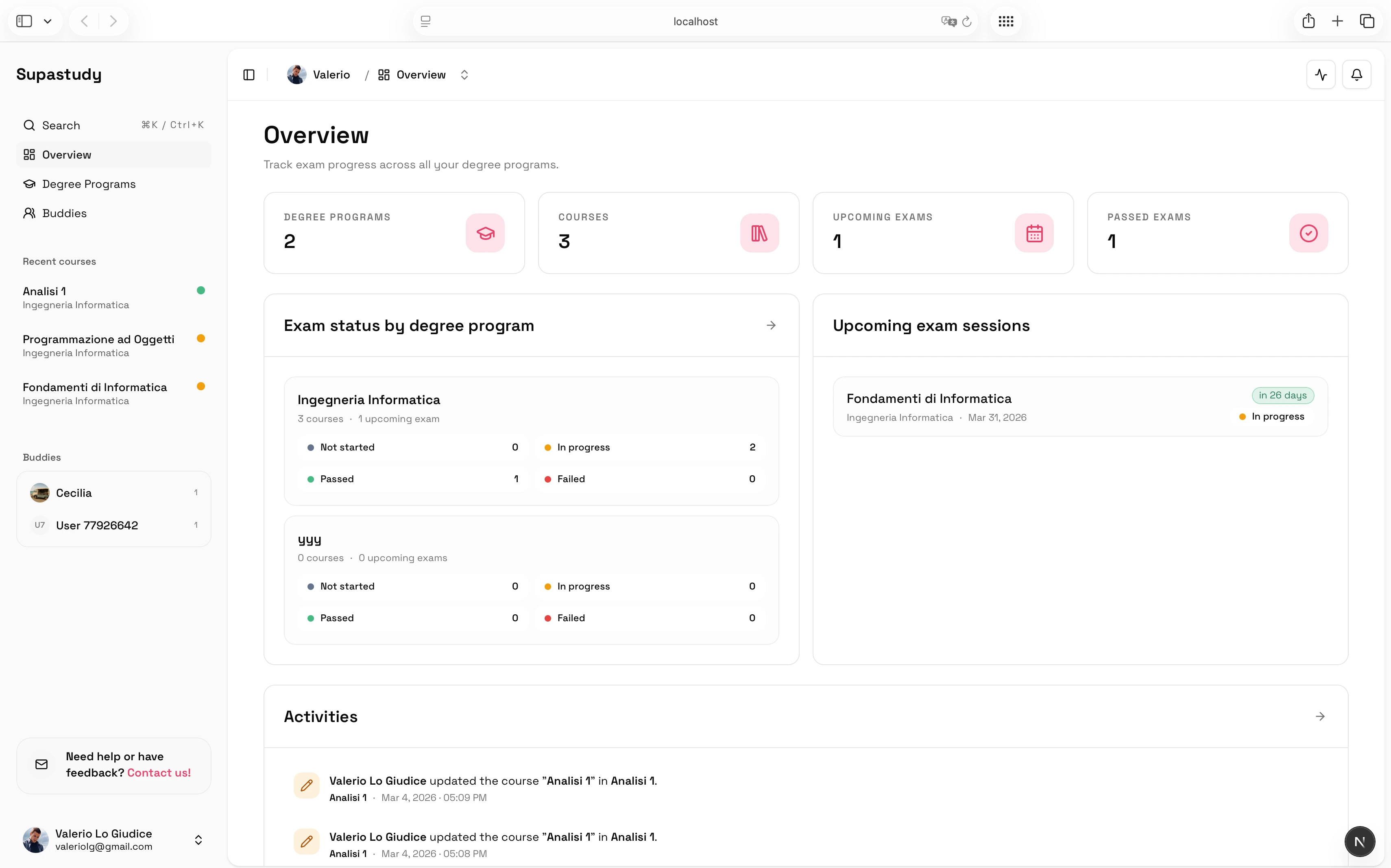
A public course is discoverable by other Supastudy users. Students can find it through public course search, review the course overview, and join as viewers with read-only access. That model becomes useful when the goal is visibility and reuse rather than closed collaboration.
In practice, public sharing starts to make sense when a course has become mature enough that other students can learn from it without needing editing rights. A clean topic structure, well-placed notes, organized files, and resolved questions can be genuinely valuable to someone who did not help build the course in the first place. Public visibility is a way of turning that effort into a reusable academic resource rather than keeping it trapped inside one study group.
This is also where discoverability matters. Public courses are easier to surface across a degree context, which means students can reuse a structure or learn from a better-organized course instead of rebuilding everything from zero every semester.
Why read-only access is often exactly right
Students sometimes assume that public access is only useful if everyone can edit. In practice, read-only viewing is often the healthier model. It allows a course to be shared safely, lets others browse the structure, allows downloads without opening editing permissions, and reduces accidental changes. That is especially useful for larger audiences or for mature course spaces that should stay stable.
Read-only access also creates a cleaner boundary between the people maintaining a course and the people learning from it. The original group can keep ownership of the structure while still making the result broadly useful.
A common pattern is private first, public later
One practical pattern is to use both modes over time. A small group may begin by building the course privately during the semester, using roles, invite links, notes, files, and questions to prepare together. Once the structure is mature and the materials are no longer only internal working notes, the group can decide whether the course is useful enough to make discoverable as a public resource. That sequence keeps collaboration safe first and opens visibility later only when it makes sense.
Important privacy detail
One of the most useful boundaries here is that personal exam data stays personal. In Supastudy, exam date, exam grade, and course status tracking can remain private to the user even when the course itself is shared.
That means collaboration does not require giving up private progress data.
What to read next
If your focus is active group study, read How to Study With Classmates Without Losing Materials in Chat. If your focus is course structure, read How to Turn a Syllabus Into a Study Plan. If you want the broader product overview, read Introducing Supastudy.
Final takeaway
Private courses and public courses are not competing modes. They solve different problems. Private courses are best for active collaboration with classmates. Public courses are best for discovery, read-only sharing, and reuse by a wider student audience.
If you want to test which model fits your next course, you can start with a free account. If you want the collaboration limits and plan details first, visit the pricing page or the FAQs.