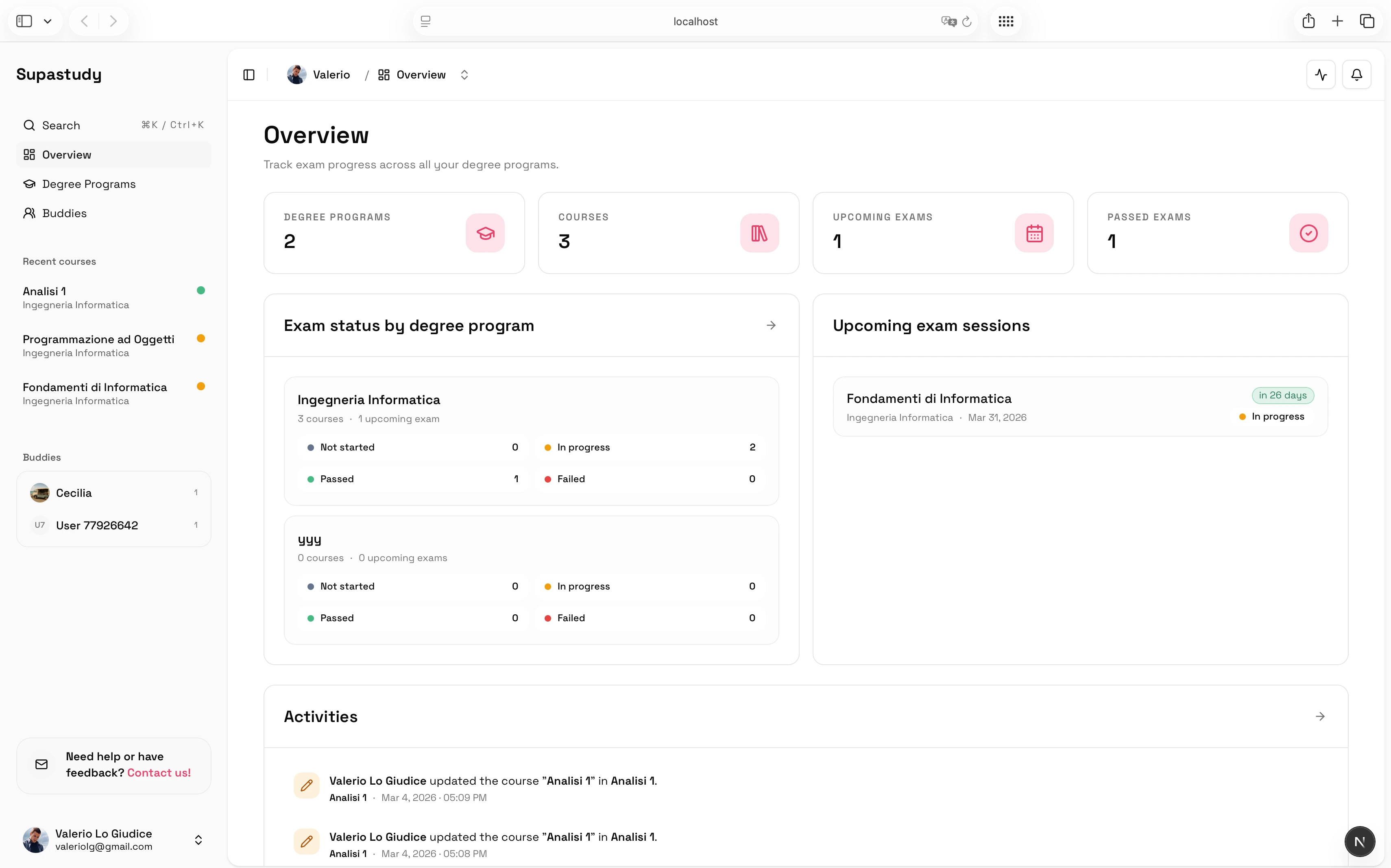
Most students receive a syllabus, skim it once, and then spend the rest of the semester studying from disconnected lecture slides, scattered notes, and whatever files happen to be easiest to find at the moment. That is one of the main reasons revision feels chaotic near the exam. The course never actually became a study plan. It stayed as reference material.
The good news is that turning a syllabus into a study plan does not require an elaborate productivity system. What it requires is a repeatable way to translate the course outline into a structure that can hold the rest of your work. Once that happens, the syllabus stops being a document you occasionally reopen and starts becoming the map you study from.
Why a syllabus alone is not enough
A syllabus tells you what the course covers, but it does not automatically tell you how to study it. It does not tell you how to break the material into revision units, where to keep notes for each chapter, which lecture slides belong to which topic, or what should be reviewed first once the exam gets close. Those decisions still have to be made somewhere.
That is exactly why many students feel like they "have the material" but still do not feel organized. The content exists, but it has not been turned into a working structure. A study plan begins when the syllabus is translated into something you can navigate, update, and review over time.
Start by defining reviewable units
The first move is to pull the syllabus apart into chunks you could realistically revise. Depending on the course, those chunks may correspond to weekly modules, textbook chapters, lecture blocks, or official sections of the exam program. The exact naming matters less than the visibility it creates.
What you want is a structure that lets you say, with some confidence, "this part is covered, but that part is still weak." If the whole course remains one long document or one large folder, that kind of judgment becomes much harder. In Supastudy, this is where the topic tree becomes useful. Students can add topics manually or use the outline import flow to turn syllabus text into a more navigable structure.
This is also the point where students often overcomplicate the process. The structure does not need to be academically perfect on day one. It only needs to be good enough that you can move through the course without losing your bearings. A simple, stable map is usually more valuable than a hyper-detailed taxonomy that you stop maintaining after two weeks.
Let the outline become the way you move through the course
Once the topics exist, the syllabus should stop living as a separate reference file. It should become your main way of moving through the course. This is the moment where the course stops being a pile of materials and starts becoming a study plan.
That change has practical consequences. Notes stop floating as isolated pages and start belonging to chapters. Files stop being "somewhere in the course folder" and start being attached to the topics they support. Questions stop living in screenshots or chat and begin to sit inside the same structure as the rest of the material. Progress also becomes easier to judge because you can review the course by topic instead of by memory.
Pull your existing material back into context
By the time students start organizing a course, they usually already have something: lecture slides, lab sheets, textbook notes, summaries, or past exam questions. The mistake is to keep those in a flat archive while building a completely separate study plan.
The better move is to pull those materials into the course structure itself. In Supastudy, that usually means uploading files into course folders, linking notes to one or more topics, and attaching questions to the chapter where the doubt actually belongs. That context is what makes later review faster. Instead of remembering a file name or retracing old chat history, the student can move from the topic to the material that explains it.
Use the structure to expose the real gaps
This is the step students most often skip, even though it has the biggest effect on revision quality. As soon as the structure exists, it becomes possible to look for gaps. Which topics still have no notes? Which chapters have files but no summary? Which sections keep generating difficult questions? Which parts of the course are still effectively untouched?
The benefit of a structured study plan is not only organization. It is gap detection. If students can identify the empty parts of a course early, the final revision phase becomes far more controlled. Instead of discovering missing material under pressure, they can fill those gaps while the course is still active.
Add exam context only after the course is visible
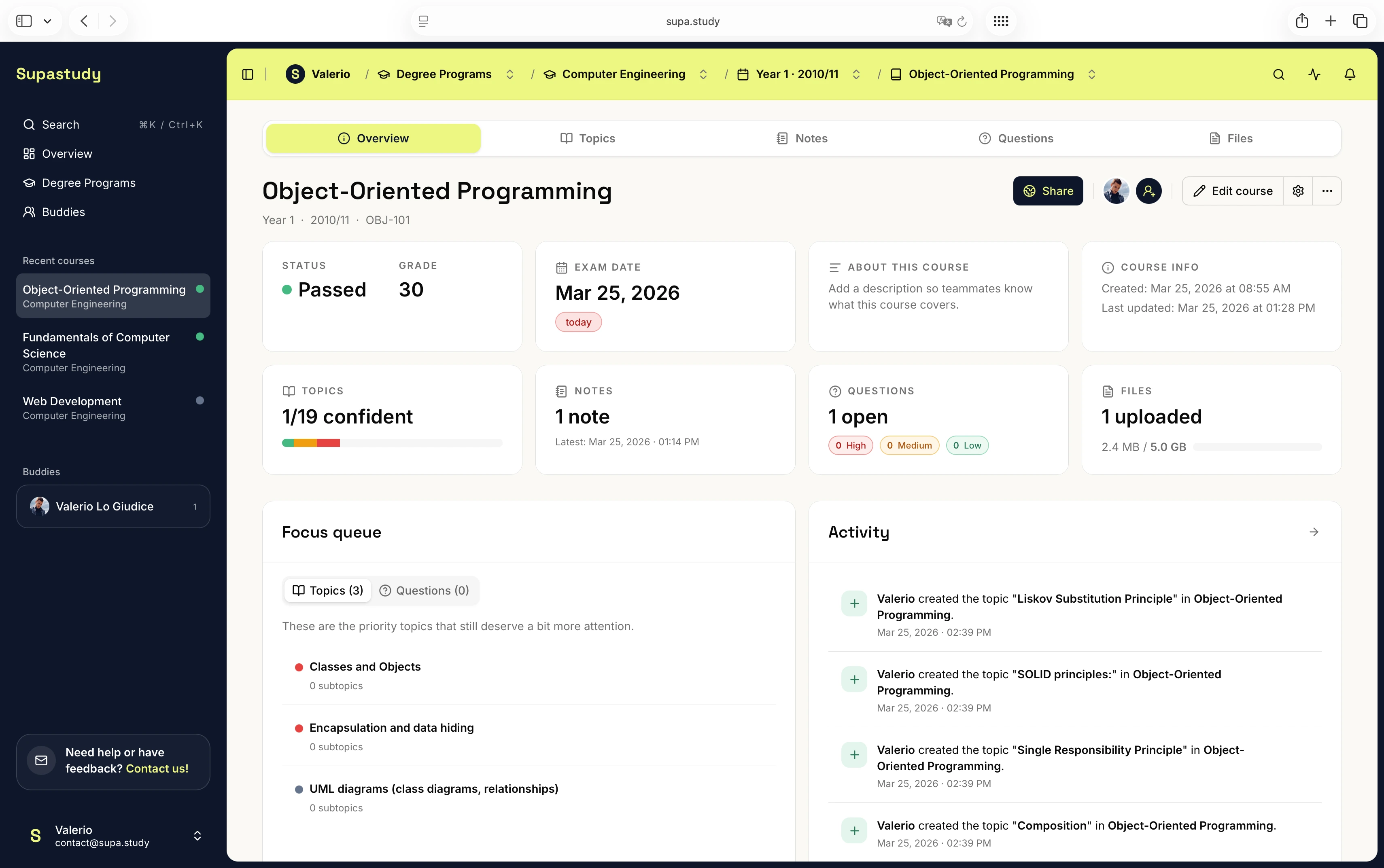
A study plan becomes much more useful when it is anchored to the actual exam timeline. Add the exam date, keep track of course status, and use that information to decide what matters now versus later. At that point, not all topics are equal anymore. One chapter may already feel confident and only need light review. Another may have no notes and one unresolved question. A third may have all the files in place but still feel conceptually weak.
That is the difference between a static syllabus and a living exam plan. One tells you what the course includes. The other helps you decide what to do next.
A Supastudy workflow example
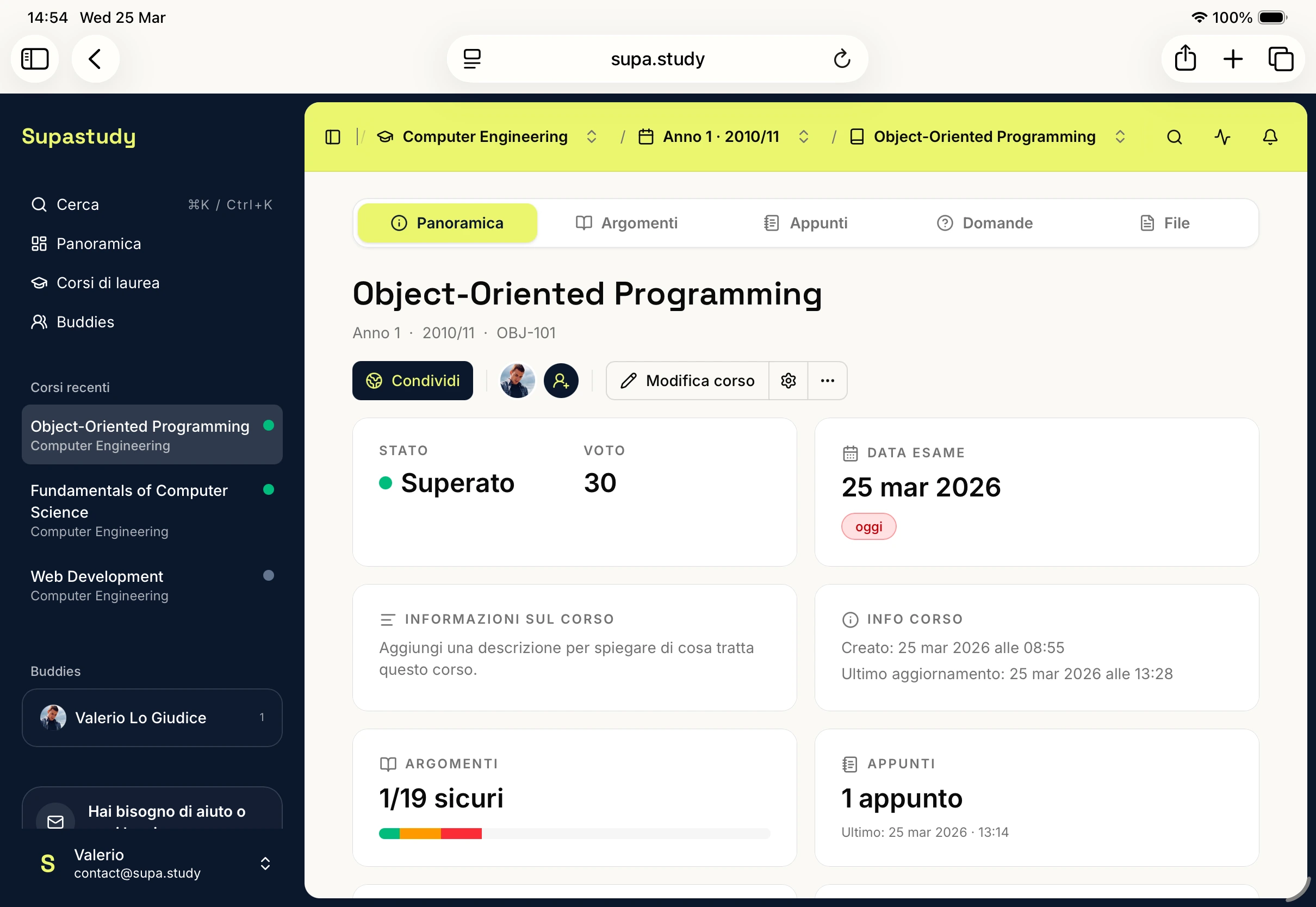
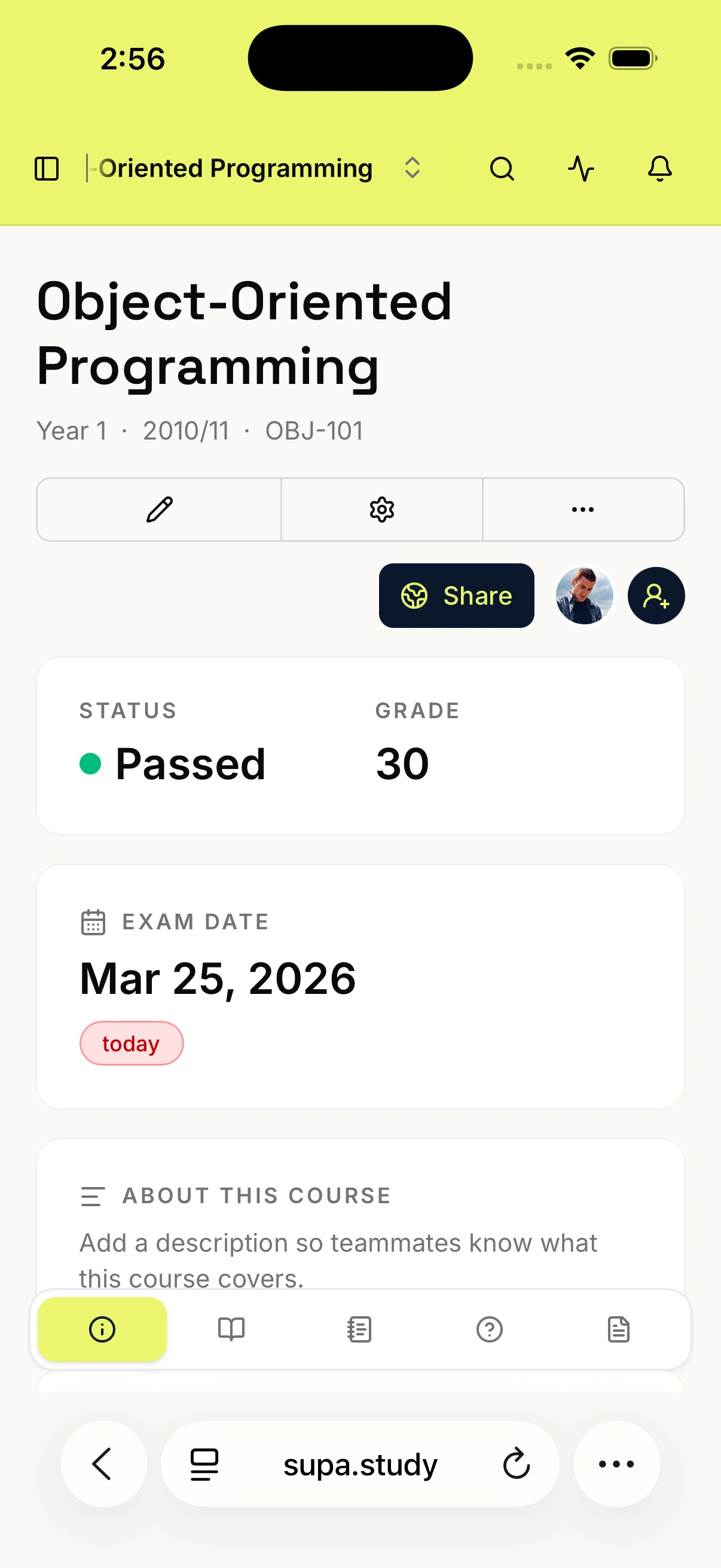
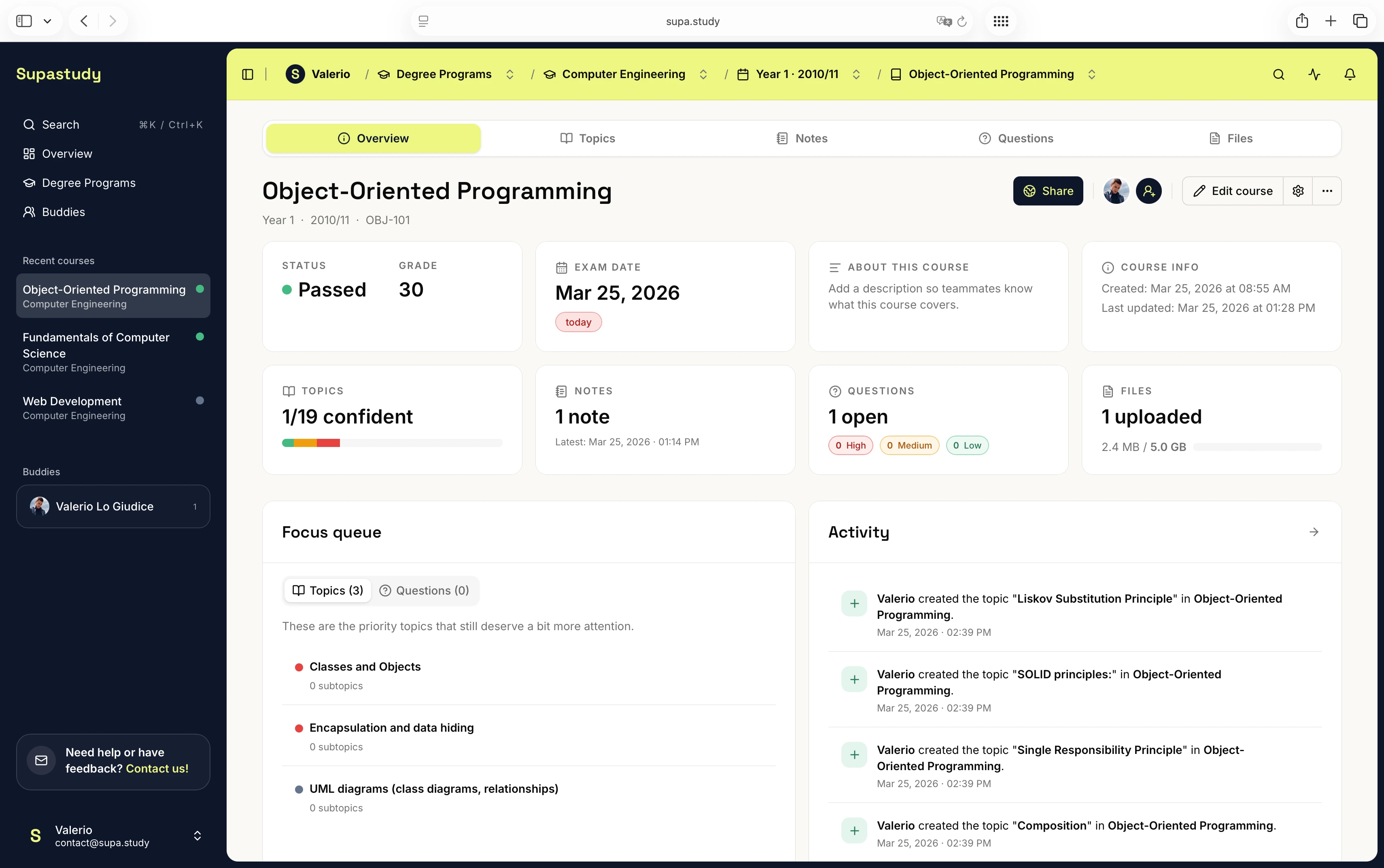
One practical Supastudy flow for a course such as Biochemistry I looks like this. First, create the course inside the degree program and paste the syllabus outline into the topic importer. Then review the generated structure and clean up chapter names until the course matches the way you actually expect to revise it. After that, connect the existing lecture slides to each chapter, add one summary note for every topic already covered, save open doubts as questions under the right topic, and set the exam date so the course overview becomes more meaningful.
Once that is done, the student can answer the questions that matter during revision. Which topics still have no notes? Which areas still feel difficult? Where are the relevant slides for this chapter? What needs to be reviewed next? Those questions are hard to answer when the syllabus remains a static file. They become much easier once the course has been turned into a working structure.
Common mistakes when turning a syllabus into a plan
The most common mistake is keeping the structure too flat. If the entire course stays as one page or one folder, students lose the visibility that makes targeted revision possible. Another common mistake is organizing only by document type. Folders called "slides," "notes," and "past papers" are useful, but they are not a study plan by themselves because they say nothing about the syllabus context.
Timing also matters. This workflow works best when it is created early enough to catch gaps while the course is still active. If students wait until the last month, the structure can still help, but it becomes more of a rescue operation than a stable working system. Finally, if the course is shared with classmates, the outline needs to stay simple enough that everyone can use it. A clean shared structure is usually better than an over-engineered one.
What to read next
If note retrieval is your biggest problem, read How to Organize Study Notes by Topic Instead of by Date.
If you want to take the same course structure and turn it into a time-based exam workflow, read How to Build an Exam Study Plan From Your Syllabus.
If you want the broader product overview, read What Is a Study Planner for University Students?.
Final takeaway
A syllabus becomes useful when it stops being reference material and starts being your course structure. Once topics, notes, files, and open questions all live in one place, the course becomes much easier to revise and much harder to lose control of.
If you want to build that structure for your next exam, you can start with a free course in Supastudy. If you want to understand collaboration and plan limits before setting things up, visit the FAQs or the pricing page.