A lot of exam plans fail for the same reason: they are too vague. "Review notes," "study chapters," and "redo old material" may look like preparation, but they do not really tell a student what has been organized, what is missing, or what should come first. They are reminders that work exists, not an actual plan.
An exam study plan becomes useful only when it starts from the course itself. Once the syllabus is turned into visible review units, students can prioritize, track gaps, and decide what to revise first with much more confidence. That is what separates a real plan from a stressed list of intentions.
Start with material before you start allocating time
Before assigning time, define the material. That sounds obvious, but many students do the reverse. They try to create a revision calendar before they have actually translated the course into study units.
The better approach is to take the syllabus and split it into reviewable chunks such as chapters, subtopics, or official exam themes. This is the same principle behind a strong topic-based course structure. If students cannot see the course in chunks, it becomes very hard to build a realistic revision plan because every calendar decision is based on a vague sense of workload rather than a visible structure.
Give each topic an honest readiness signal
Once the structure exists, each topic needs an honest readiness label. It does not have to be overly precise. Broad states such as not started, studying, confident, and not confident are enough. The goal is not perfect measurement. The goal is to replace the fuzzy feeling of "I think I mostly know Chapter 4" with something clearer and more actionable.
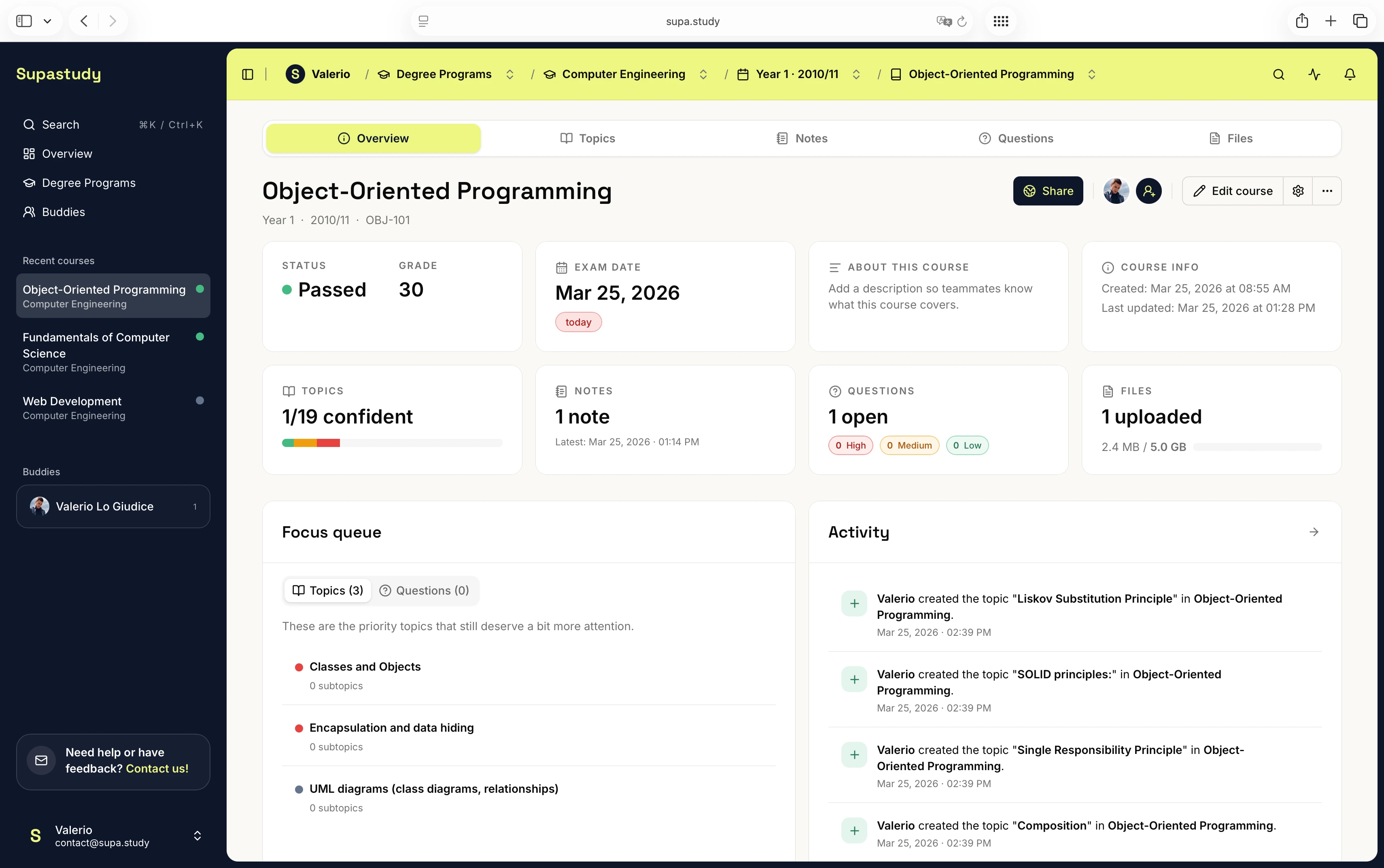
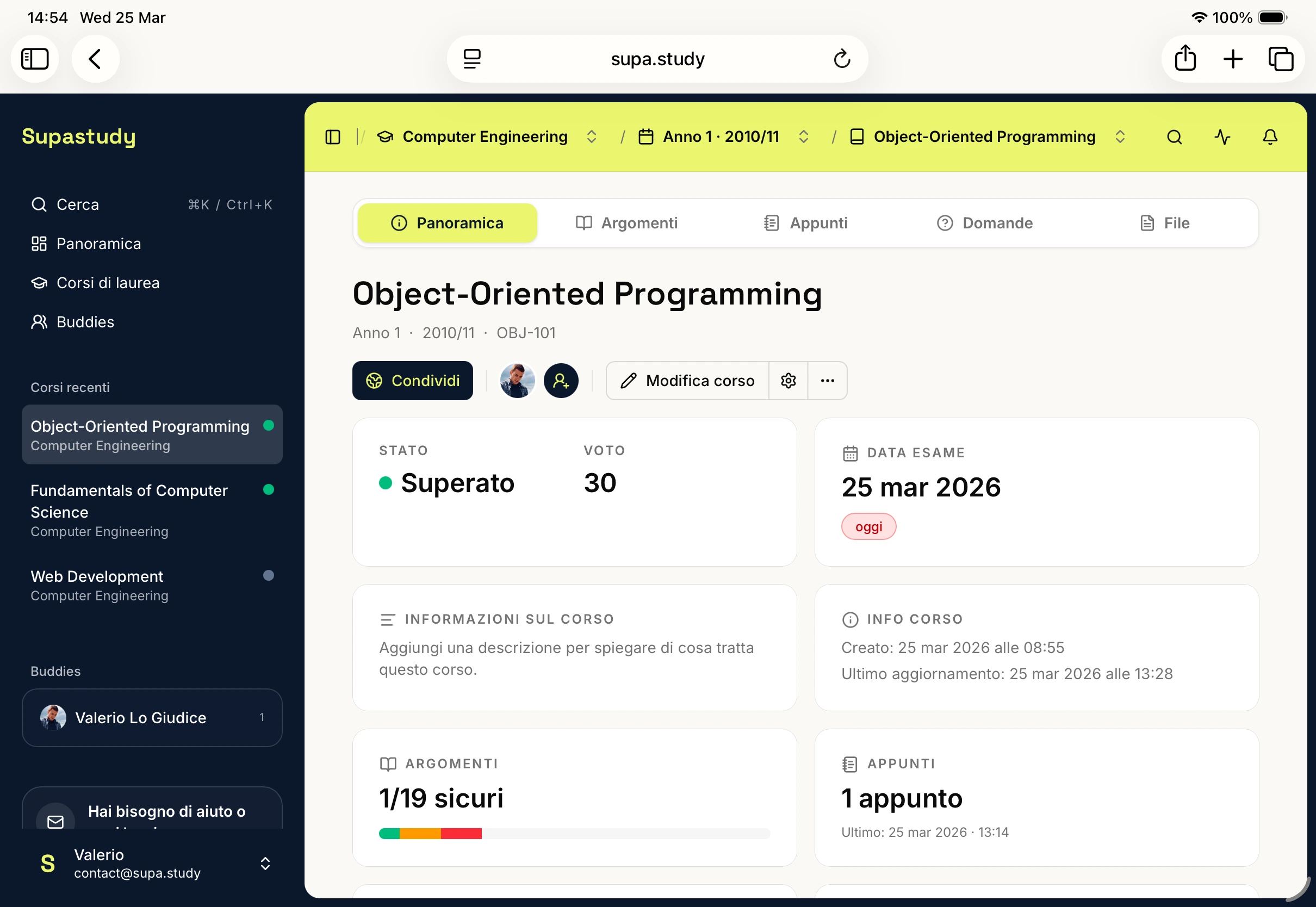
In Supastudy, topic status and course overview features make this easier because the material is already attached to the topic tree. Students are not evaluating a chapter in the abstract; they are evaluating it while seeing the related notes, files, and questions around it.
This is also where many students become more realistic about the course. A chapter may feel "fine" until they notice it has no proper note, two unanswered questions, and one file they have not actually reviewed. Readiness works because it forces vague impressions to collide with visible evidence.
Make every review unit easy to retrieve
Every exam topic should have its key resources easy to reach. That includes notes, lecture slides, PDFs, past papers, and open questions. If revision starts with a scavenger hunt, the study plan will always feel slower and weaker than it should.
This is why a real exam plan is not just a schedule. It is also a retrieval system. Students do not only need to know when they will revise a chapter. They need to know that when the moment comes, the material for that chapter is already organized and easy to use.
Separate difficult chapters from merely unfinished ones
Students often spend too much time on what already feels familiar because it is easier to revisit. A better plan isolates the real blockers: chapters with no notes, topics with repeated questions, difficult sections with weak explanations, or files that exist but have not yet been summarized into usable knowledge.
This is where a structured question bank becomes valuable. If doubts are stored by topic, students can tell whether a chapter still feels hard because of one unresolved concept or because the whole area is still under-built. That distinction matters because it changes what kind of revision work is actually needed.
Work backward from the exam only after the course is mapped
Once the material and blockers are visible, the course can be anchored to the exam date. From there, the work naturally falls into phases. Early on, the priority is building the topic structure, collecting notes and files, and capturing open questions. In the middle phase, the focus shifts toward filling missing notes, clarifying hard topics, and reducing unresolved questions. In the final phase, confident topics can be reviewed more lightly while the harder chapters receive more focused attention through summaries, accepted answers, and past papers.
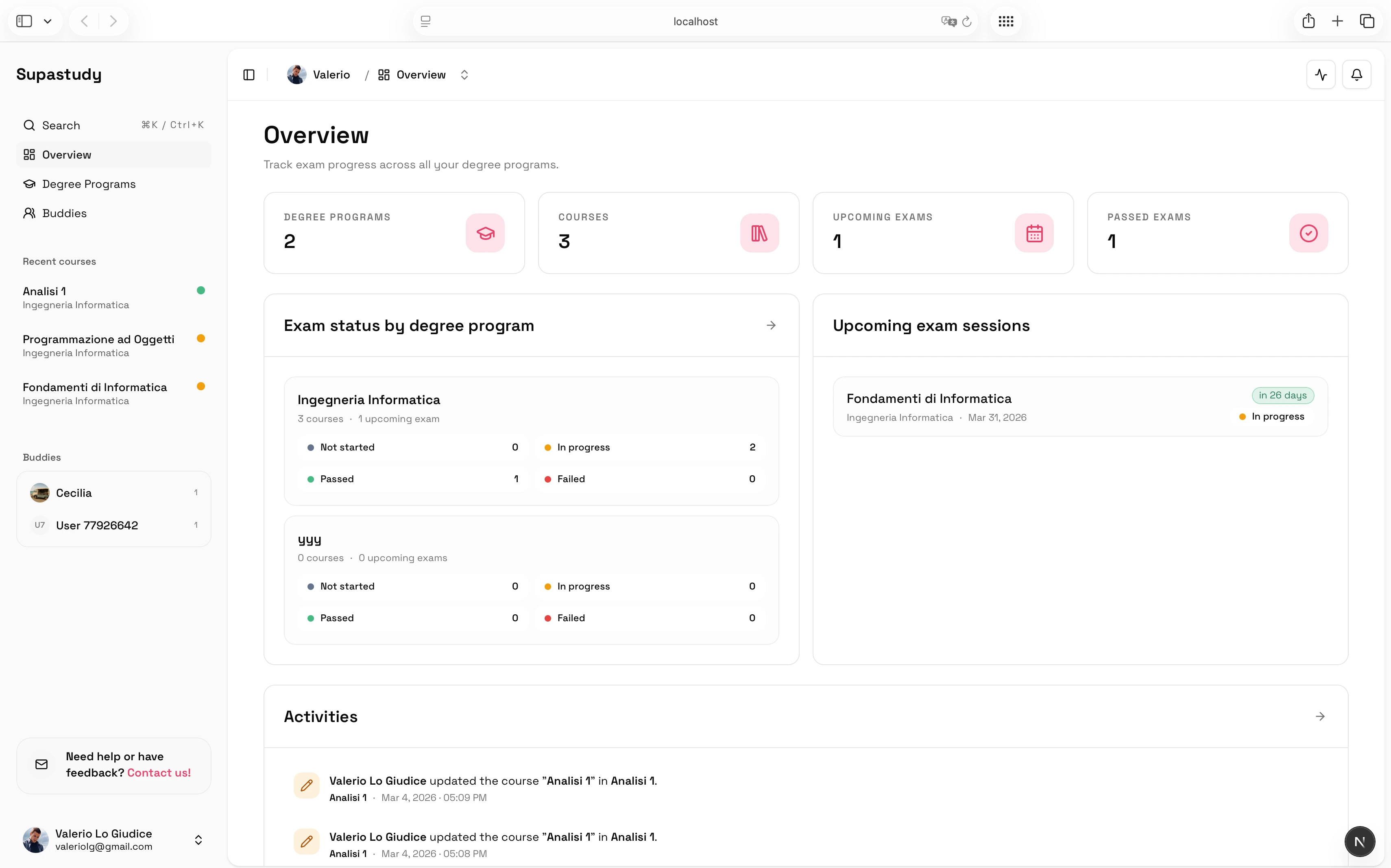
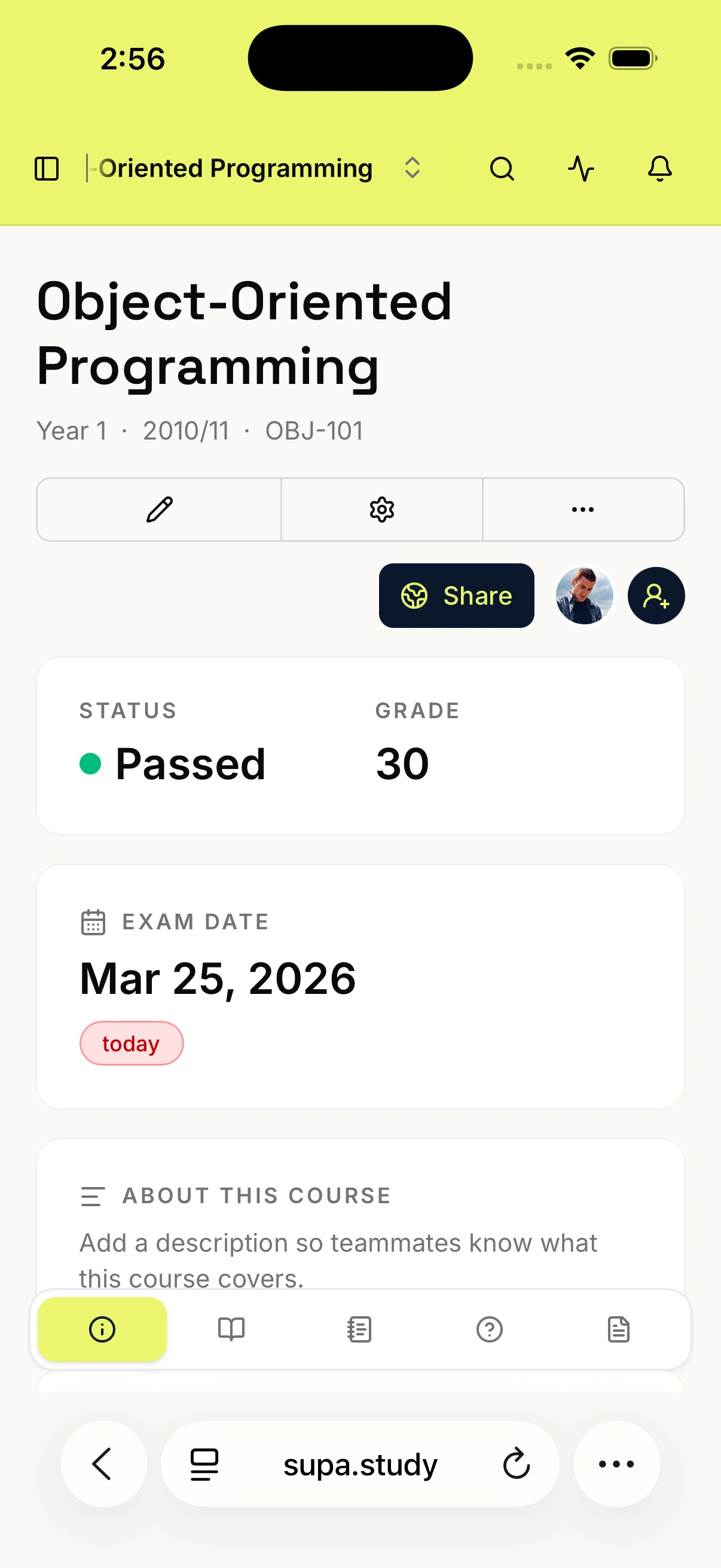
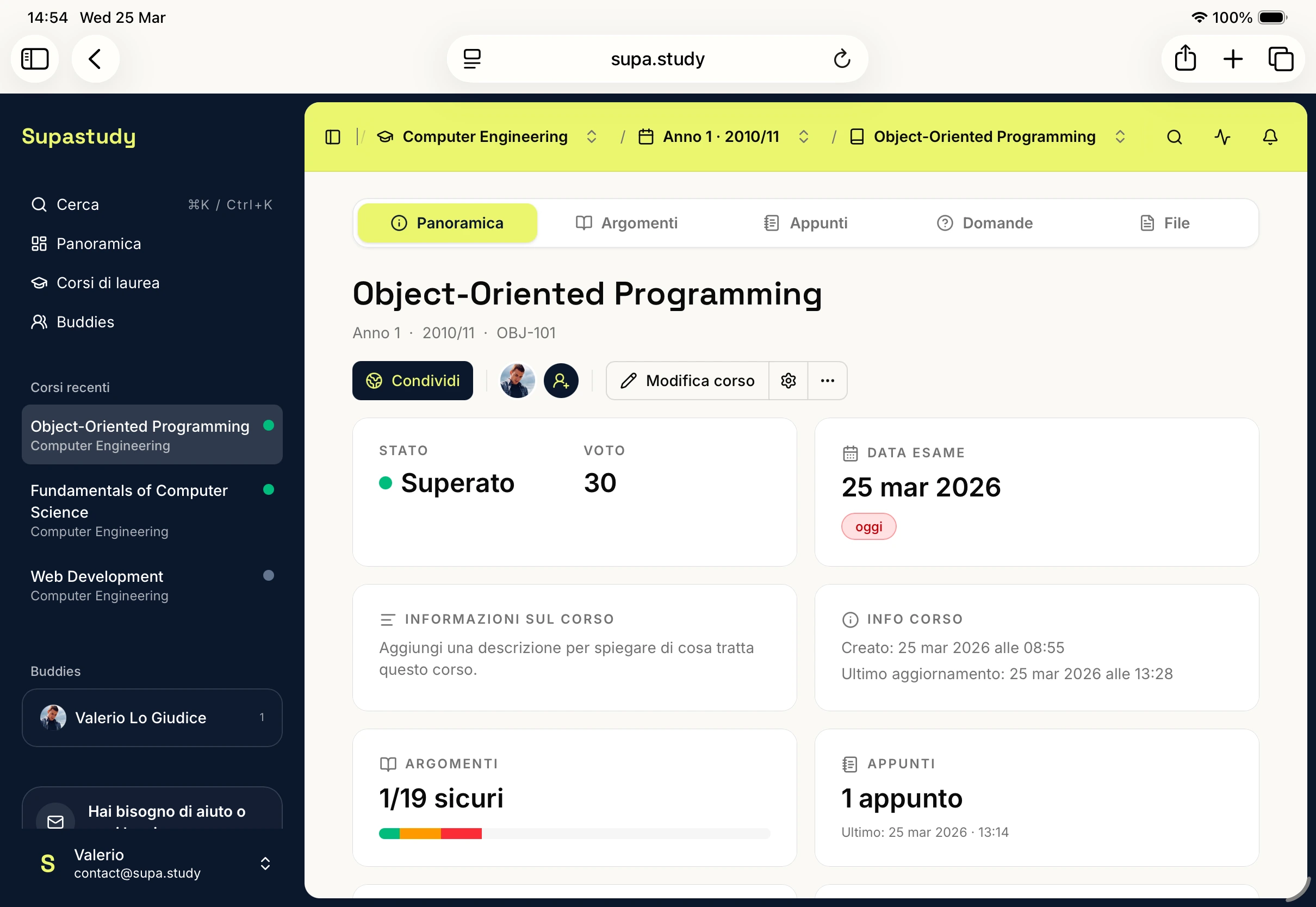
This kind of pacing is much easier to manage when the course overview already shows exam dates, countdowns, status, and activity in one place. It turns revision from a general feeling of urgency into a sequence of clearer decisions.
A Supastudy workflow example
One practical Supastudy workflow for a single course begins by adding the course, setting the exam date, and turning the syllabus into a topic tree. Students can then mark each topic by current confidence, link notes and lecture files to the right chapters, save unresolved doubts as questions, and review the course overview weekly to decide what the next study session should target.
At that point, the exam plan is no longer "study more." It becomes much more specific. Review Chapter 2 because it has one difficult question and no final note. Summarize Chapter 3 because the files exist but the concept note is still missing. Recheck Chapter 5 because it is marked not confident. That level of specificity is what makes a plan genuinely usable.
How to use the last five days well
When the exam is very close, the same structure can simply be compressed into shorter review passes. One day can be used to map the course and confirm what is still weak. Another can focus on the chapters with the biggest content gaps. Another can be used for difficult questions and accepted answers. Another can focus on summarized notes and linked files. The final pass can stay concentrated on the hardest sections instead of reopening the entire course from scratch.
The exact timing changes from course to course, but the principle stays stable: review by topic readiness, not by panic.
Common mistakes in exam planning
The most common mistakes are planning time before planning content, treating all topics as equal, ignoring unresolved questions, and keeping the plan separate from the material itself. If students do not know the actual topic structure, calendar blocking becomes guesswork. If all chapters are treated as equally ready, time is wasted on what already feels solid. If unresolved questions are ignored, the same confusion keeps reappearing. And if the plan lives in one tool while the notes live elsewhere, execution friction rises immediately.
What to read next
For the setup step, read How to Turn a Syllabus Into a Study Plan. For better retrieval, read How to Organize Study Notes by Topic Instead of by Date. For broader tool selection, read The Best University Study Planners in 2026: Reviews & Comparison.
Final takeaway
An exam study plan should come from the course structure itself. When the syllabus becomes topics, the topics carry notes and files, and the open doubts are visible, revision becomes calmer and much more specific.
If you want to build that flow inside one course workspace, you can create your first course for free. If you want to compare that approach with a general workspace tool, read Supastudy vs Notion for University Exam Prep.